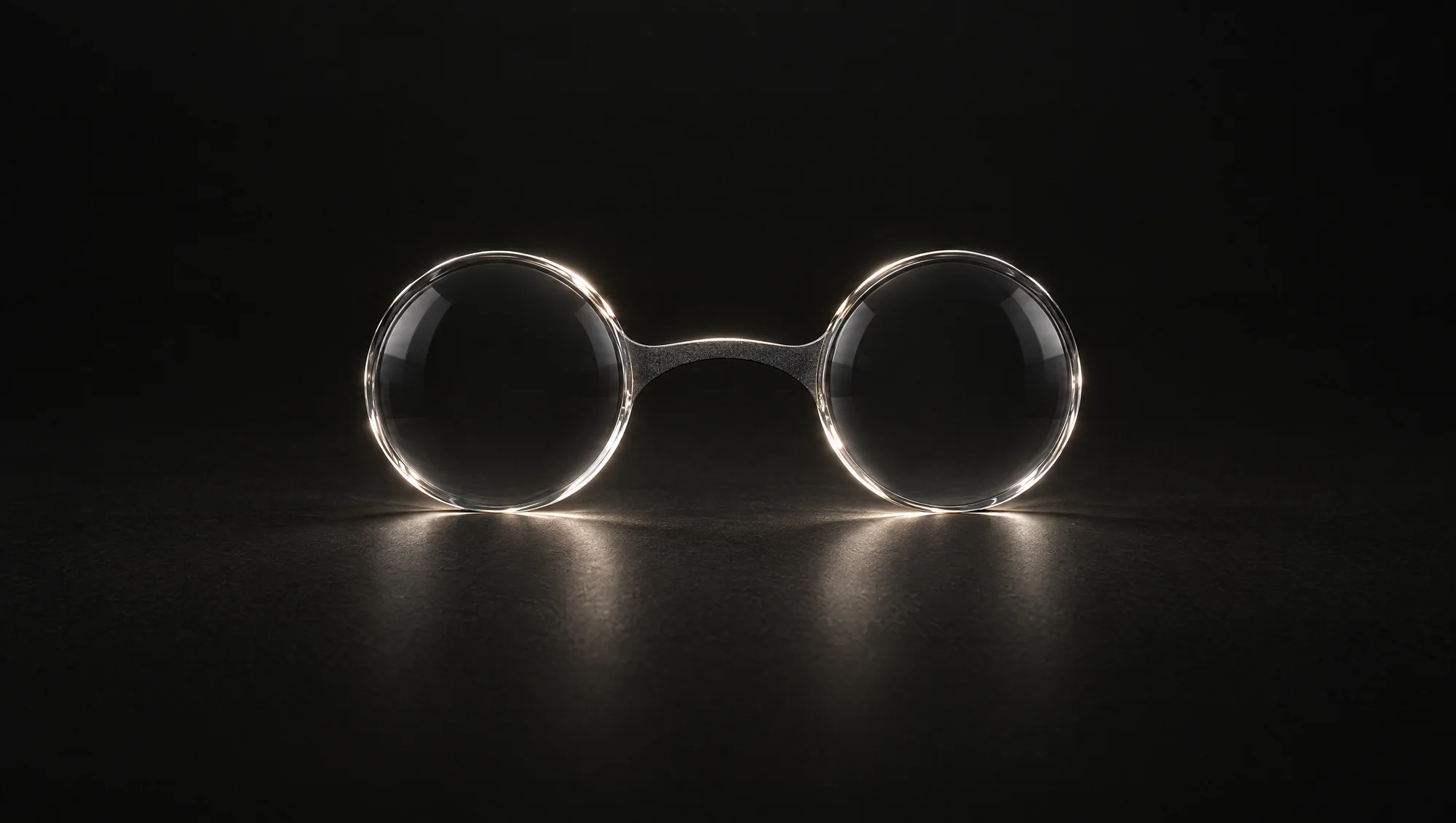
Glasses sell, headsets wait
Smart glasses now sell in millions, while headset makers rethink their plans. Where augmented and virtual reality already pay off, at work and in the sale.
Ask what augmented and virtual reality look like in 2026, and the honest answer is: mostly like an ordinary pair of glasses. The device that is actually selling has a camera, microphones and speakers in the frame, and in most cases no display at all.
The terms are worth keeping apart. Virtual reality, VR, puts you inside a computed world. Augmented reality, AR, lays digital things over the real one. XR is the umbrella for both. AI glasses are something else again: frames that connect you to an assistant by voice. This year the market split along exactly those lines.
Glasses are selling
EssilorLuxottica, which makes the Ray-Ban and Oakley glasses with Meta, said in February that it sold more than 7 million AI glasses in 2025, against 2 million in 2023 and 2024 combined. Counterpoint Research reported this month that shipments of AI glasses rose 263 percent in the first half of 2026. Ninety six percent of them had no display.
In that segment Meta held about 94 percent. Counterpoint's research vice president Peter Richardson noted that three years after the first Ray-Ban Meta glasses, the competitive landscape has barely changed. Meta is widening its range from both ends. In June it launched glasses under its own name from 299 dollars. Its Ray-Ban Display, which puts a small screen in one lens and is steered by a wristband that reads the muscle signals of the hand, costs 799 dollars in the United States and reaches Germany, France and Italy on 13 October at 899 euros.
Displays are still early
Glasses with a display are the small part of the market, about 4 percent of shipments, though they grew 449 percent from a low base. Here Chinese makers lead: Rokid, Even Realities and Alibaba, with China taking 45 percent of the segment. Counterpoint's principal analyst Flora Tang explains it with supply. China has a mature chain of display, waveguide and component makers, while Meta and Apple wait for the technology to mature before they scale.
Google is entering through the operating system. At its developer conference in May it said the first Android XR glasses, audio glasses made with Gentle Monster, Warby Parker and Samsung, would arrive this autumn, with display glasses as the next step.
Headsets are being rethought
The headset story is quieter. In June the analyst Ming-Chi Kuo reported that Apple had dropped both a second Vision Pro and a lighter Vision Air to put its resources into glasses. Bloomberg's Mark Gurman, who reports that a second model is still in testing, describes the category as on ice. Apple's first glasses, according to Gurman, are now planned for late 2027, and they will have no display.
Samsung launched Galaxy XR, the first Android XR headset, in October 2025 at 1'799 dollars. Meta, which sells the Quest headsets, showed something different at Connect this week: VR glasses that weigh about 100 grams, with the computer, storage and battery in a puck on a cable, due next spring at 1'300 dollars and pitched at films, games and work as a screen for the computer. The direction is the same everywhere. Lighter, closer to glasses, and made for specific uses rather than a whole day.
The limits
Counterpoint names two brakes on the market: rising prices for memory and other components, and public unease about cameras on people's faces. Meta's answer this week was Ray-Ban Meta Audio, glasses with microphones and speakers and no camera at all, from 349 dollars. Counterpoint expects more such forms, including glasses whose cameras serve context rather than photos.
Companies will meet the same question in their own rooms: what may be recorded in a showroom, a practice or a meeting room, and who has to be told.
Where XR already works
At work, XR earns its place where a task is spatial, rare or expensive to practise. When Apple presented Vision Pro to business in 2024, KLM was training engine technicians on 3D engine models in full detail, Porsche race engineers were reading live car data alongside track conditions, and builders were reviewing plans and 3D models in an app called Resolve. In April Samsung added Android Enterprise support to Galaxy XR, so companies can enrol, lock and wipe headsets like phones, and named training, manufacturing, healthcare and retail as the fields it wants to serve.
The same logic applies to selling. A study in the Journal of Marketing found that augmented reality raised online sales, modestly overall and much more for expensive products, for less popular brands and for customers new to a category. The authors concluded that it helps most where uncertainty about the product is high. Lowe's Style Studio, presented in the same Apple showcase, lets shoppers design a kitchen in 3D and see it in space.
Rooms you can stand in
For the trades that sell kitchens, bathrooms, interiors and facades, the useful form of XR is not a headset in every home. It is a room the customer can step into before it exists: in the meeting on the consultant's headset, or as a 3D model and a 360 view on a phone at home.
That is how Beform uses it. Beform, a product and brand of crue GmbH at beform.ai, turns a photo of a client's own room into a picture of the finished project, and every result is available in 3D and as a room to stand in on a headset, with 360 tours captured on a phone. Reel makes 3D objects and product mockups in a brand's locked style, so a product can be shown in a scene before it exists. The picture still needs a person who knows what can be built. Taste, the right material and the promise behind the price stay with the consultant.
What a company can do now is modest. Build its products and spaces in 3D once, so the same model works in the browser, on the phone and on a headset when a customer wants one. Keep a headset in the showroom for the decisions that are hard to imagine, not a fleet. And make its product facts clear enough for an assistant in a pair of glasses to answer for it, because more and more often the first question will be spoken.